
Once every three years, supreme audit institutions from across the world meet to share their knowledge and experience. The latest congress (‘INCOSAI 2025’) was attended by hundreds of supreme audit institution presidents, vice-presidents, heads of International Affairs and other delegates.
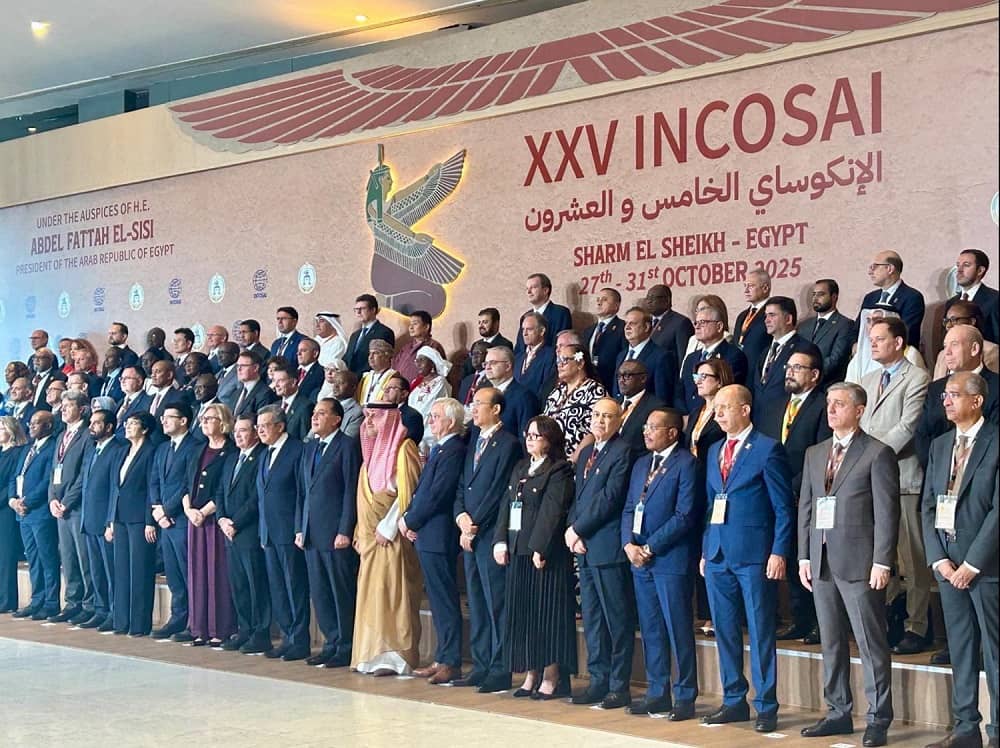
Arranging such large-scale events is a prestigious occasion for the host country, and comparable to the NATO summit organised by the Netherlands earlier this year. This time, it was the turn of Africa – and specifically Egypt, as one of the continent’s larger countries – to host the event, with the opening ceremony in Sharm El-Sheikh being proudly presided over by the Egyptian prime minister. But how interesting was it and what did we discuss?
The Netherlands was represented at INCOSAI by a small delegation from the Netherlands Court of Audit. But we didn’t go there just for the official congress. The Court of Audit, funded by the Ministry of Foreign Affairs, has been collaborating with supreme audit institutions from across the Arab world for many years. So this time, rather than getting everyone to fly to The Hague, we all agreed to meet in Sharm El-Sheikh the day before INCOSAI. I’m very proud of how we and these other supreme audit institutions have collaborated over the years. Our Arab colleagues, too, are very positive about the progress that has been achieved, as also evidenced by the fact that these talks were attended by almost all the presidents of the supreme audit institutions of Libya, Iraq, Palestine, Jordan, Tunisia, Morocco and Algeria.
We very much enjoyed the Egyptian hospitality and all the efforts made to ensure that everything ran smoothly and securely. That also goes for Anis, our Egyptian assistant, who worked hard to organise things efficiently, including all the rooms we needed for our various meetings. These rooms were really vital because, for us, the informal programme was at least as important as the official programme and gave us the chance to talk to representatives from countries such as Belgium, Suriname, Norway, Switzerland, Yemen, Syria, China, India, Indonesia, Canada and New Zealand, to name but a few. Most of these meetings involved requests for collaboration, along with discussions of digitalisation and AI in our work. Unfortunately, the issue of supreme audit institutions’ ‘independence’ was also on the official agenda. The reason I say ‘unfortunately’ is because we’re seeing this independence come under pressure all around the world, including in Europe and the United States.
Something we’re also seeing internationally is more and more supreme audit institutions having direct contacts with citizens and businesses, as well as with parliament. Jordan, for example, reported that 15% of its audits are now in response to requests or complaints from citizens. By contrast, the Netherlands Court of Audit is not publishing its first report following requests from citizens and businesses until next year! It was also very interesting to hear how other supreme audit institutions are using AI and how much progress they’ve achieved. While some of the examples we heard about were truly impressive, there’s clearly no ‘big bang’ moment as far as putting AI into practice is concerned. The Netherlands Court of Audit is certainly not doing badly in this respect. But we have absolutely no grounds for complacency.
After the official assembly, the Egyptian Accountability State Authority invited us, along with many other guests, to a dinner at the Sharm El-Sheikh museum. This was an excellent opportunity for more informal discussions. For us, this was what really mattered. The next day it was time to return to the Netherlands, tired but enriched by everything we had learned in Egypt.